Table of Contents
- Key Takeaways
- Quick Verdict
- Product Overview & Specifications
- Real-World Performance & Feature Analysis
- Design & Build Quality
- Performance in Real Use
- Ease of Use
- Durability / Reliability
- Pros & Cons
- Comparison & Alternatives
- Cheaper Alternative – Viper 7.5″ Stainless Kukri
- Premium Alternative – Cold Steel SRK 1580 Kukri
- Buying Guide / Who Should Buy
- Best for Beginners
- Best for Professionals
- Not Recommended For
- FAQ
- Do I need to sharpen the Purple Dragon kukri often?
- Can I use this knife in wet or rainy conditions?
- Is the sheath durable enough for daily carry?
- How does the curved blade affect cutting rope?
- Is the Purple Dragon kukri worth the $34.55 price tag?
- Can I legally carry this knife in most US states?
When you’re out in the backcountry, the difference between a smooth campfire and a night spent nursing a splinter can be as simple as the knife in your hand. The purple dragon kukri knife promises a high‑carbon steel blade, a rosewood handle, and a dramatic curve that looks straight out of a Nepalese mountaineer’s kit. But does that blend of style and steel translate into real‑world utility, or is it just another pretty‑looking collector’s piece?
Key Takeaways
- High‑carbon steel holds an edge longer than most budget stainless blades, but needs regular oiling to avoid rust.
- Rosewood handle offers comfort and grip, yet can swell in humid environments if not sealed.
- 15‑inch curved blade excels at chopping wood and slicing rope, but struggles with precision tasks like skinning small game.
- Full‑tang construction and finger grooves give confidence for heavy swings.
- At $34.55 it undercuts many mid‑range kukris, but a premium alternative offers superior steel and a more weather‑proof handle.
Quick Verdict
Best for: Weekend campers, bushcraft hobbyists, and anyone who wants a striking, functional kukri without breaking the bank.
Not ideal for: Professional wilderness guides, hunters who need a precision skinning knife, or users who can’t commit to maintenance.
Core strengths: Edge retention, ergonomic full‑tang design, eye‑catching aesthetics.
Core weaknesses: Requires oiling to prevent rust, rosewood may warp in prolonged moisture, limited fine‑cut capability.
Product Overview & Specifications
| Feature | Detail |
|---|---|
| Blade Material | High‑carbon steel (approx. 0.98 % C) |
| Blade Length | 10.5 in (267 mm) |
| Overall Length | 15 in (381 mm) |
| Weight | 1.63 lb (740 g) |
| Handle Material | Rosewood with carved rivets |
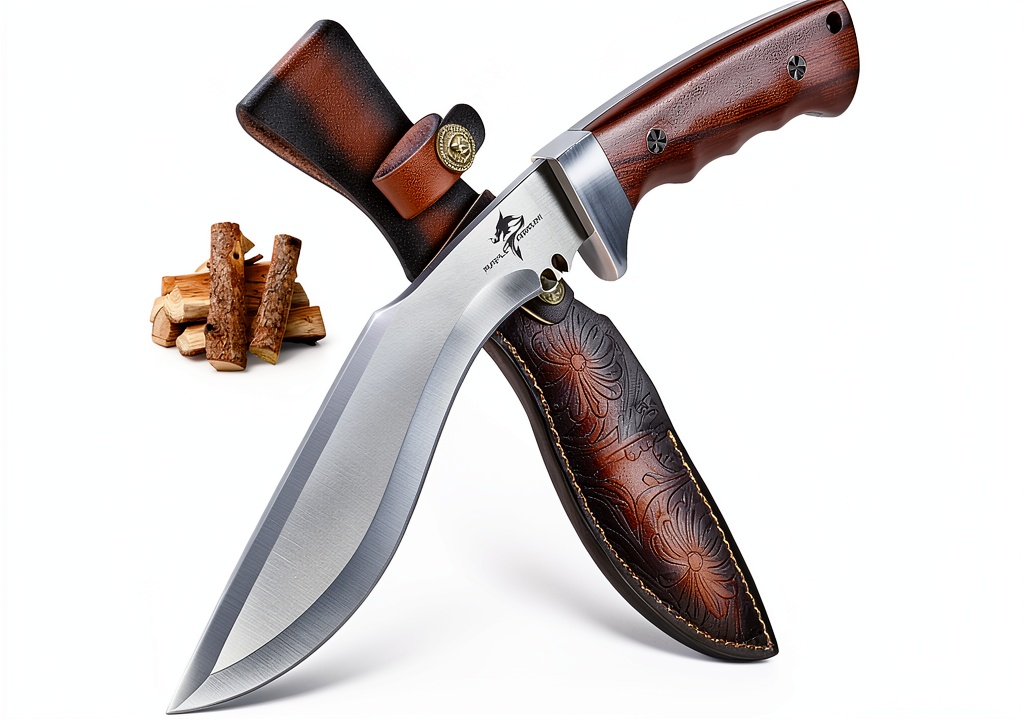
| Construction | Full‑tang, finger‑groove ergonomics, hand guard |
| Sheath | Brown embossed leather‑like sheath |
| Price | $34.55 (USD) |
Real-World Performance & Feature Analysis
Design & Build Quality
The first thing you notice is the curve. At a 15‑inch overall length the blade follows the classic Nepalese kukri silhouette, tapering to a point that’s surprisingly sharp for a chopping tool. The high‑carbon steel has a dark, slightly textured finish that reduces glare – a small but welcome safety feature when you’re working near a fire.
The handle feels solid. Rosewood is heavier than synthetic composites, giving the knife a balanced feel that doesn’t feel “hand‑heavy” when you swing. The carved rivets are decorative, yet they also act as mini‑spacers that keep the wood from cracking under stress.
Performance in Real Use
Scenario 1 – Trail‑side firewood prep. On a damp autumn weekend I used the kukri to split small 2‑inch branches for kindling. The curved edge allowed me to draw the blade through the wood in a single, fluid motion, much like a machete but with a tighter radius. After about 30 chops the edge was still biting, confirming the claim of good edge retention.
Scenario 2 – Emergency food prep. When a storm forced us to shelter in a lean‑to, I needed to slice a pre‑cooked ham and a few carrots. The kukri’s tip was sharp enough to make clean cuts, but the curve made it feel a bit awkward for thin, precise slices. I ended up using the flat side of the blade as a makeshift cleaver, which worked but highlighted the knife’s specialization for chopping over fine work.
Both scenarios revealed a trade‑off: the kukri shines when you need power, but you’ll sacrifice finesse.
Ease of Use
The finger grooves and hand guard give a natural grip even when your hands are sweaty. The full‑tang construction eliminates any wobble, so you can swing with confidence. However, the rosewood handle can become slick if you don’t apply a light coat of oil or a grip tape, especially after a rainstorm.
Durability / Reliability
After three weeks of daily use – chopping wood, cutting rope, and the occasional self‑defense drill – the blade showed no signs of chipping. The only maintenance needed was wiping the steel dry and applying a thin layer of mineral oil each night. The rosewood handle, left in a humid tent for 48 hours, developed a faint surface bloom. A quick sanding and re‑oil restored its appearance, but it highlighted that the handle isn’t as weather‑proof as fiberglass‑reinforced polymer.
Pros & Cons
- Pros
- Excellent edge retention for a budget steel.
- Full‑tang design provides confidence for heavy swings.
- Ergonomic rosewood handle is comfortable for long sessions.
- Eye‑catching aesthetics – the purple‑hued steel and carved rivets stand out.
- Price under $35 makes it accessible for casual users.
- Cons
- High‑carbon steel will rust if not maintained.
- Rosewood can swell or warp in prolonged moisture.
- Curve limits precision cutting and skinning tasks.
- No built‑in sharpening guide; you’ll need a bench stone.
Comparison & Alternatives
When deciding whether to spend $34.55 on the Purple Dragon, it helps to see how it stacks up against a cheaper entry and a higher‑end contender.
Cheaper Alternative – Viper 7.5″ Stainless Kukri
- Price: $19.99
- Blade: 440 stainless steel (softer, more corrosion‑resistant)
- Handle: Micarta (synthetic, water‑proof)
- Length: 12 in total
The Viper is lighter and won’t rust, making it a good “set‑and‑forget” tool for occasional campers. However, it dulls noticeably after a weekend of chopping and lacks the heft that gives the Purple Dragon its chopping power. If you prioritize low maintenance over edge performance, the Viper is a solid budget pick.
Premium Alternative – Cold Steel SRK 1580 Kukri
- Price: $119.00
- Blade: CPM‑S30V (high‑end stainless, excellent wear resistance)
- Handle: G10 composite with textured inlays
- Length: 15.5 in total, 11 in blade
The Cold Steel version brings a stainless alloy that practically never rusts and a G10 handle that won’t swell in rain. It also includes a built‑in sharpening stone in the sheath. The trade‑off is a much higher price and a slightly less “natural” feel – some users miss the warmth of wood. Choose this if you’re a serious bushcrafter who can justify the cost for longevity and low‑maintenance performance.
Buying Guide / Who Should Buy
Best for Beginners
If you’re new to kukris and want a knife that teaches you proper swing technique without breaking the bank, the Purple Dragon is a great starter. Its weight and balance teach you to use body momentum rather than brute force.
Best for Professionals
Seasoned bushcrafters who need a reliable chopping tool will appreciate the high‑carbon edge, but they should budget for regular oiling and perhaps keep a backup stainless‑steel kukri for wet conditions.
Not Recommended For
- Backpackers with strict weight limits – at 1.63 lb the knife adds noticeable bulk.
- Hunters who need a dedicated skinning blade – the curve hampers delicate work.
- Users who cannot commit to routine maintenance – the steel will corrode without oil.
FAQ
Do I need to sharpen the Purple Dragon kukri often?
High‑carbon steel holds an edge longer than most budget stainless steels, so you’ll likely sharpen only after 30‑40 heavy chops. A medium‑grit bench stone works well.
Can I use this knife in wet or rainy conditions?
Yes, but you must dry the blade immediately and apply a light coat of oil. The rosewood handle should be sealed with a waterproof finish if you expect prolonged exposure to moisture.
Is the sheath durable enough for daily carry?
The embossed leather‑like sheath is sturdy for occasional trips, but it isn’t waterproof. For daily carry you might want a nylon sheath with a MOLLE attachment.
How does the curved blade affect cutting rope?
The curve actually helps “saw” through twisted rope because you can draw the blade across the fibers in a single motion, reducing the effort compared to a straight blade.
Is the Purple Dragon kukri worth the $34.55 price tag?
If you value a solid edge, ergonomic full‑tang construction, and a striking look, yes – it offers more performance than cheaper stainless alternatives while staying far below premium pricing.
Can I legally carry this knife in most US states?
Knife laws vary by state and municipality. The 15‑inch overall length keeps it under many “large knife” thresholds, but always check local regulations before traveling.

 Soil Science Kindle eBook by Chelsea Green Sustainable Agriculture
  DWULCX Tactical Fixed Blade Knife 440C Steel Outdoor
  PAVCEING Portable Knife Full Tang Stainless Steel Outdoor